
Cutaways is a personal essay series where Canadian filmmakers tell the story of how their film was made. This TIFF 2025 edition by directors Tamara Faith Berger and Clement Virgo focuses on their film Steal Away.
In her book Steal Away Home, Canadian historian Karolyn Smardz Frost offers a meticulously researched account of the unusual real-life relationship between two young women in antebellum Kentucky: Frances "Fanny" Thruston, a white debutante, and Cecelia Reynolds, an enslaved girl "gifted" to Fanny at the age of nine. Teenaged Cecelia eventually escaped during a Thruston family vacation in Niagara Falls, finding freedom in Canada, but letters exist between the two long after.
Smardz Frost's riveting book was a jumping-off point for us to explore the difficulties of young female relationships in a society ruled by extreme racial inequity in our film Steal Away, which makes its world premiere at TIFF this week.
The idea of a young white woman and a young Black woman thrust together in the same sleeping quarters, both coming of age, was irresistible as dramatic fodder. Yet as we debated deeply, we realized that we didn't want our film to be directly about slavery; we wanted to tell a more contemporary story in a kind of transhistorical world — an analog present that evoked both the Deep South and colonial Europe.
Inspired by Einstein, who wrote that the distinction between past, present and future is only a persistent illusion, we worked on world-building for our film using a mélange of anachronistic technology, futuristic fashion and timeless teenage emotions. Playing with time, place and genre at the screenplay stage proved to be crucial to our process of writing a female-led thriller shot through with real history.
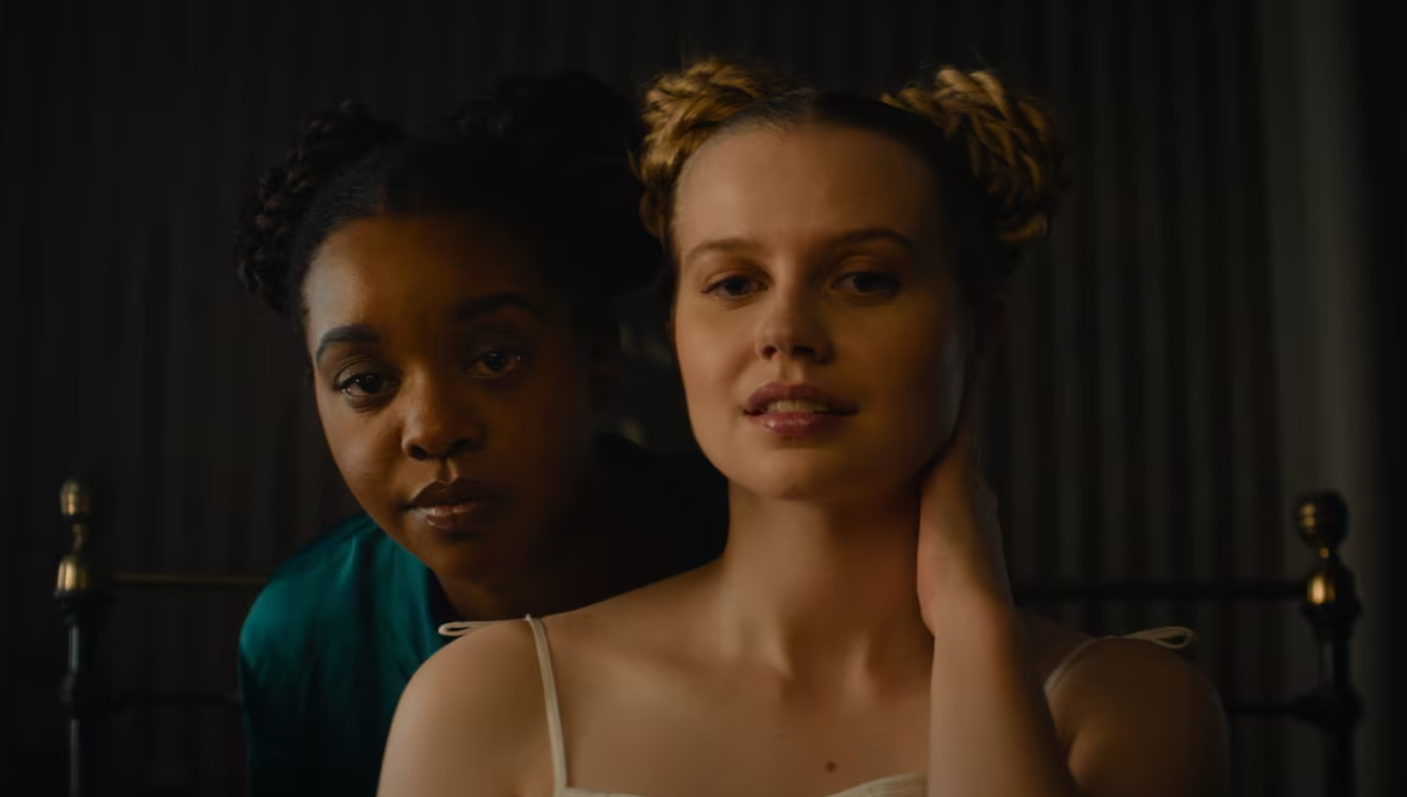
In classic thrillers, it's male protagonists who usually venture deep into shadowy worlds to uncover truths that are larger and more sinister than they first realize. In Steal Away, we focused on the women, following the journey of a young African traveller Cécile, who finds herself drawn into a seemingly safe haven in Fanny's family home. Filled with sexual agency and obsessed with seeking full freedom in the mythical North, Cécile slowly realizes that reality is not as it seems in this stop on her journey. Fanny, for her part, becomes obsessed with Cécile, mirroring her and using her to embark upon her own emergent sexual and political coming-to-be.
During our process of writing and imagining, we looked to Afrofuturist films like Anisia Uzeyman and Saul Williams's Neptune Frost and other speculative, world-building films like David Lynch's Blue Velvet and Charles Laughton's The Night of the Hunter. Mirrored visions of femininity, as in Lynch's Mulholland Drive and Ingmar Bergman's Persona, also inspired our own world of danger, sensuality and risk.
We knew that this film was going to ride or die on casting. And as writers, it was heartening to see the ways that young actors really wanted to dig their teeth into the roles of Fanny and Cécile. Our dual protagonists are complicated characters, operating in a world where forces reign beyond their control. Teenage girls in all eras are also often magnets for their culture's sexual anxieties, and all the actors who read for these roles wanted to embody this unbridled rebellion and vulnerability in their own way.
When we saw American actor Mallori Johnson's tape (reading for Cécile), we knew that she would captivate audiences with her deeply intelligent beauty and matchless talent. Mallori played Cécile as rebellious and independent, exactly as we had imagined her. Seeing Australian actor Angourie Rice read for Fanny felt pitch-perfect, too. She had the right amount of awkwardness, playing Fanny's naiveté and erotic desires against each other. Angourie understood that Fanny was in a bubble that needed to be popped.
The Canadian actors who came into our world for this film also enchanted us completely. There was the young Idrissa Sanogo as Rufus, who the camera just loved, and Gloria Mampuya, who broke our hearts in her brilliant portrayal of Muna. We were so lucky to work with Arnold Pinnock, who plays Washington, and Ronnie Rowe, who plays Dr. Fisher. And Lauren Lee Smith — who we worked with on our first film, Lie with Me, 20 years ago — swept into this project like a miracle, blowing us away as Florence, the driving force of the movie that everything else rides on. It was truly incredible to collaborate with Lauren again. She completed the circle of Steal Away.
Shooting in Belgium for four months with a talented Belgian, Dutch, Swedish, Mexican and Canadian crew was a very exciting time, with our 19-year-old son working in film for the first time as a PA. The shoot was full of energy and endurance, shuttling from the Han caves in the Ardennes to Lozer Castle just outside of Ghent. Each location felt dense with the resonances of the European, African and Canadian histories of colonialism — all of which we were trying to weave together in the film.
Steal Away is a story that is meant to be cathartic, forcing us to identify with historical inequities and be with them deeply through a kind of emotional provocation and rebirth. But ultimately, we wanted to film a hopeful ending to this story that disgorged so much darkness. It was fitting, then, that the process of making Steal Away was not only cathartic but hopeful for us, too, as we embarked on a new path of collaboration and partnership.