
Virgo and producer Damon D’Oliveira discuss forming the Belgian coproduction and opening against The Odyssey.
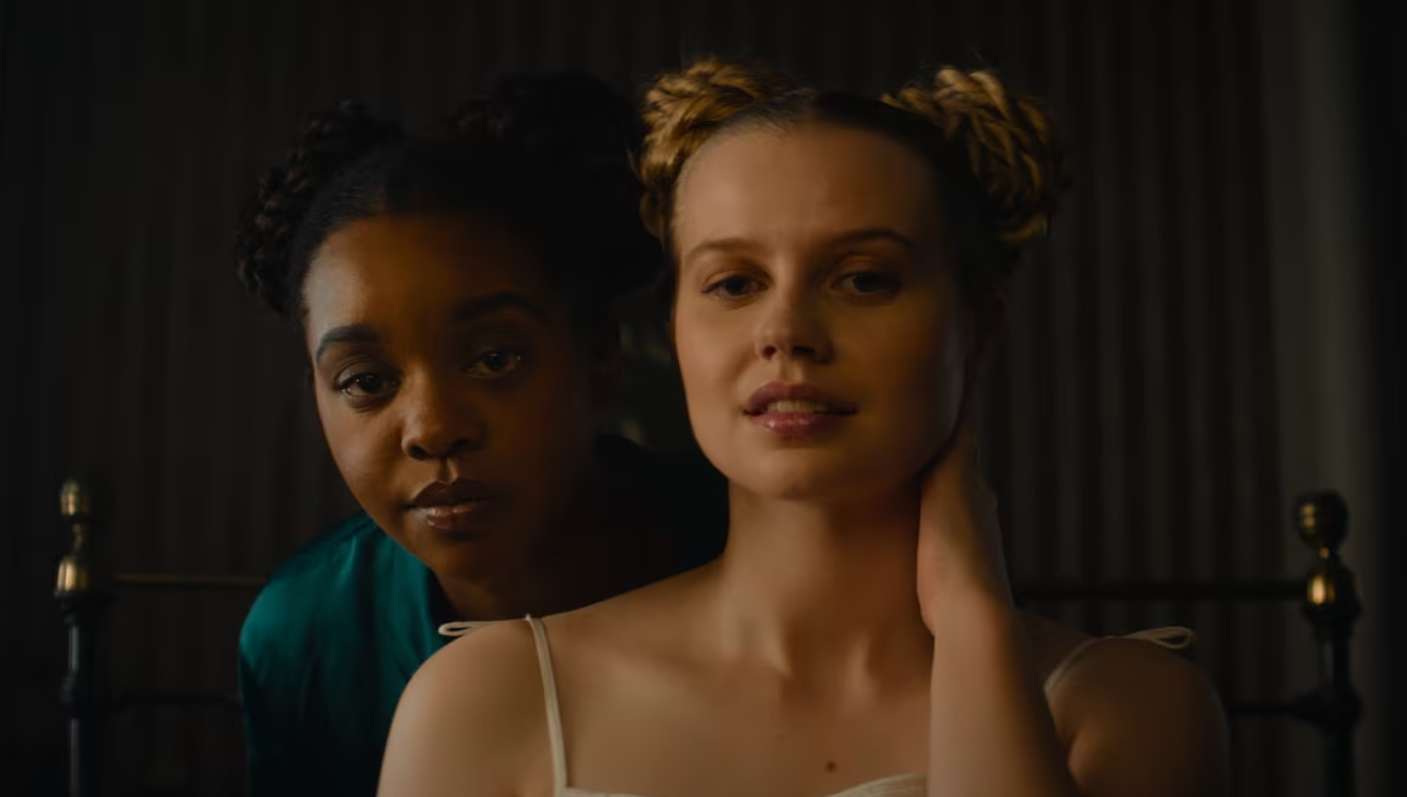
Clement Virgo’s psychological female-focused drama and transhistorical thriller Steal Away is going head to head with a behemoth competitor when it arrives in theatres on Friday (July 17).
“We’re going up against The Odyssey,” laughs the award-winning Toronto director of Brother and The Book of Negroes on screening at the same time as Christopher Nolan’s US$250 million mythic action epic. But he seems ready for the challenge.
“It’s so difficult to get any film made now, and get any films onto a big screen, as a filmmaker, so I feel fortunate,” says Virgo (pictured right) on a Zoom call from Sofia, Bulgaria where he’s scouting locations for his next project.
Like Nolan’s film, Steal Away also creates a mythical world, filmed as a coproduction in Belgium between Virgo and producing partner Damon D’Oliveira‘s Conquering Lion Pictures and the Brussels-based Potemkino. Virgo’s is inspired by a non-fiction book: Steal Away Home: One Woman’s Epic Flight to Freedom – And Her Long Road Back to the South, written by Canadian scholar Karolyn Smardz Frost.
The producers include Peter De Maegd and Tom Hameeuw of Brussels-based Potemkino (Hazard), in association with 2CFILM in the Netherlands. Executive producers are Paula Devonshire (Indian Horse), Caitlin Grabham (Brother), Laurie May (Infinity Pool) and Noah Segal (BlackBerry), with Edvard van ‘t Wout (Casanova’s) as associate producer.
The non-fiction book takes place in the 1800s is about the unusual and complicated real-life friendship between two young girls, a Black slave Cecelia and her white owner Fanny in Louisville, Ky. Cecilia eventually escaped to Canada but later returned to the south and resumed a friendship with Fanny, where they lived a few blocks apart.
The reimagined film takes the complex bond at the centre of the true story and explores a fictional relationship between the sheltered, awkward Fanny (played by Australian Angourie Rice) and the more confident, experienced Cecile (American actor Mallori Johnson). Fanny is wrapped up in feelings of jealously, appropriation and sexual awakening against a backdrop of racism and anti-immigrant messaging, set in an ambiguous town.
Virgo received Steal Away Home about five years ago and was intrigued by the young women’s relationship. He and his wife, Tamara Faith Berger, initially wrote a script that was more historically based, he says, but “I had done another adaptation, The Book of Negroes, written by Lawrence Hill, and I’m still intrigued by that period and that history, but I didn’t want to make another period piece.
“There are some overlaps between Steal Away and The Book of Negroes, in terms of exploring how slavery, child slavery, impacted Black people in the diaspora, whether it be in the Caribbean or South America or Canada or the U.S. It felt like a natural way to tell the story, and to wrap it in a more genre-bending, fairytale approach, mixed in with more Afrofuturism elements.”
Financing and development
Conquering Lion Pictures optioned the book from Smardz Frost, initially thinking the project would be a limited TV series, authentic to the source material, says D’Oliveira. But making a period drama set in the 1800s is “a very expensive prospect … so we pivoted.”
Berger came up with the idea to fictionalize and contemporize the story, but not place it in a specific period, so that it had a more mythic quality. “They wanted to do something that felt analogue, so we’re not interrupted by the lights and the pings of a cell phone,” says D’Oliveira (pictured left).
Once they knew it would not be a period piece, Berger and Virgo were excited about creating their own world that felt “unique and bold,” says Virgo.
Steal Away is funded by Telefilm Canada, the Canada Media Fund (CMF), Ontario Creates, distributor Elevation Pictures, BNP Paribas Fortis Film Finance and Screen Flanders. The budget was not disclosed.
The Canadian financing came first, with Telefilm as their lead partner. “That was instrumental in opening the doors. We were able to get Ontario Creates after that,” says D’Oliveira, adding that the CMF funds came through the Program for Black and Racialized Communities.
“In addition to that, we had partnerships with CBC and Crave, which was supported by our distribution deal from Elevation,” says D’Oliveira.
Then, they set about finding production partners. The team ended up doing a copro with Belgium and production partners Potemkino in April 2023 once they identified key shooting locations in the region, such as the Caves of Han in the Famenne-Ardenne UNESCO Global Geopark and Lozer Castle (Kasteel van Lozer) in Kruisem, just outside Ghent.
D’Oliveira says the Belgian tax rebate could be utilized as soon as the rest of the financing was in place.
“Belgium has led the charge in their tax shelter for financing in Europe,” he says. “It’s a smaller country, but they’ve outshone a lot of their neighbours in the ability to leverage coproduction financing. That was something that was important, but it wasn’t the only reason.
“We also looked at Belgium because they have this incredible cave system, the Caves of Han, and that was a central metaphor for Tamara in the context of telling this story. The more research we did, we realized that it was one of the few cave systems where they had built public access into it. It’s a very sensitive cave. It goes for [about] 14 kilometres, and they’ve only explored about two.”
Production and post-production
Steal Away was shot over 34 days, from May 27 to July 16, 2024, with post-production running until June 30, 2025.
D’Oliveira says casting agents Aisha Coley (U.S.), Céline De Waele (Belgium) and Stephanie Gorin (Canada) were critical to the film in finding Rice (Mean Girls) and Johnson (Kindred), alongside Vancouver’s Lauren Lee Smith (The Shape of Water) and Idrissa Sanogo Bamba (The Boys).
“WME were instrumental in helping us package the film’s lead actors,” adds D’Oliveira.
For casting, they wanted a mix of names, as well as discoveries, as Virgo and D’Oliveira have done in the past with Aaron Pierre in Brother and Aunjanue Ellis-Taylor in her first TV lead, The Book of Negroes.
“With this, we wanted to find fresh young talent for the role of Cecile and we found Mallori Johnson, who was a recent graduate of Juilliard,” he says. “Angourie Rice is one of the most professional young actresses I’ve ever encountered. She’s Australian. She’s a force of nature herself. ”
D’Oliveira says the chemistry between the two leads was essential. “It’s always nice when you see the two actors together for the first time because we couldn’t do chemistry read in person. But that first day, there was just a crackle between the two of them.”
The film was shot all around Belgium, but the Caves of Han were in the French-speaking area, close to the border.
“We respectfully approached it,” says D’Oliveira, “because you’re not allowed to smoke it up; there’s very limited amounts of lights that you can bring in. We had our one day to go in and shoot because the rest of the time it was school tours. So, we had to plan everything in our schedule around the availability of that cave moment.”
As an aside, Virgo got lost in the cave after taking a wrong turn. “I had to figure my way back out,” he chuckles. “A weird sensory deprivation thing happens. To be in a cave with a river that’s running through it and bats, and the sound; I wouldn’t recommend it if you’re claustrophobic.”
They found Lozer Castle as the central home on their second scout there. “It became our set, that incredible home that had been in the family of the owners for 350 years,” says D’Oliveira. “It was a gift for us because we were able to use that as our base of operation for production.”
After wrapping principal photography, they submitted the film to the Toronto International Film Festival for consideration in March 2025 and got an early invite as a world premiere.
“Once we had completed production and were ready to launch at festivals, we did a deal with Ryan Kampe at Visit Films to rep international sales on the project,” says D’Oliveira.
The producer says he was pleased with the response to Steal Away after the TIFF screenings. “We got a really high Rotten Tomatoes score coming out of TIFF, which is also important to help promote the film. I felt it really landed with young women and that was that was our intention,” adding, “Hopefully The Odyssey will not cloud us from performing [on July 17].”
Virgo says he was intrigued at the idea of opening opposite The Odyssey. “It’s smart to present the film as something alternative in the marketplace, especially in the summertime, so I really appreciate Elevation’s confidence in the film.”
On the distribution front, Visit Films is actively trying to sell Steal Away internationally. Virgo says the team is “holding out for a streamer” in the U.S. market. “My last film, Brother, took a while to sell, but eventually we sold it to [Netflix] in the U.S.,” he says. “And so, we’re approaching it the same way because that’s where most people are going to see the film, at home, on one of their streaming services.”