As the 51st Toronto International Film Festival takes over the city Sept. 10-20, this series of articles examines some of the Canadian directors whose lives and careers have been shaped by TIFF.
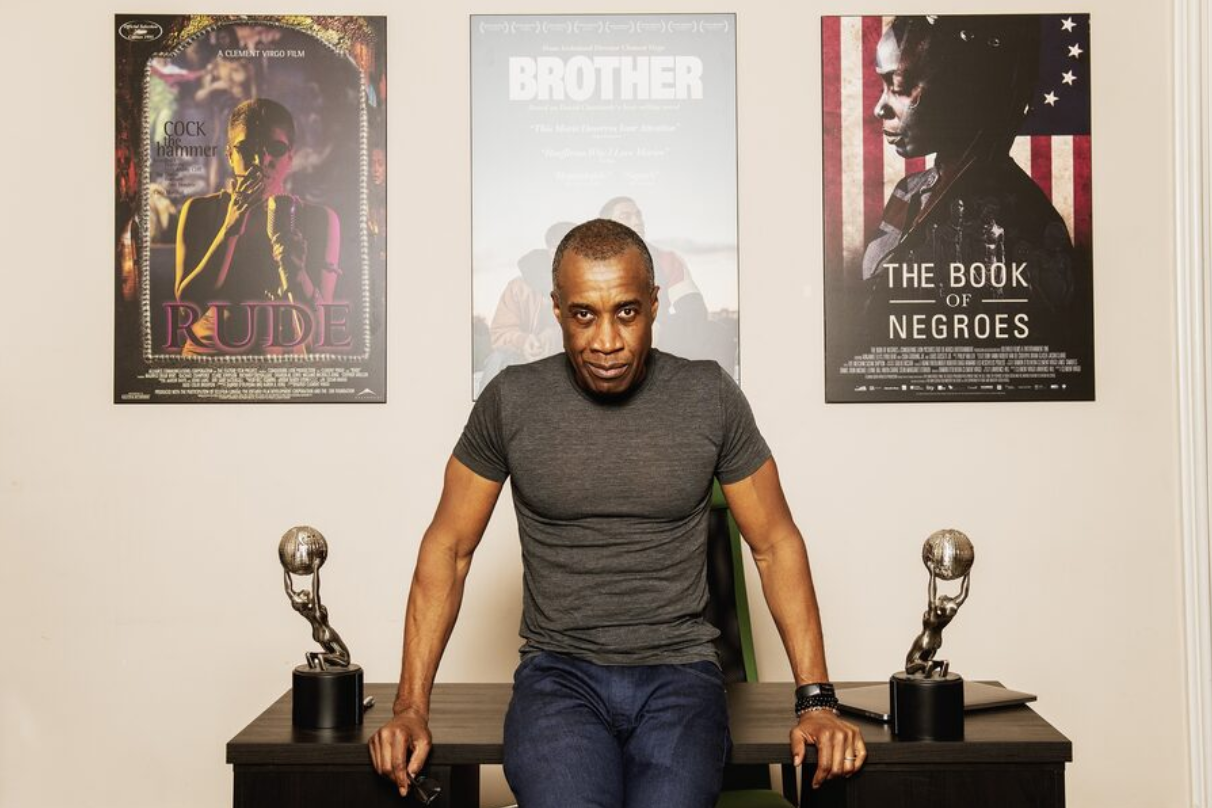
The setting is Toronto, sometime in the mid-90s. Garvia Bailey – now a veteran broadcaster and arts journalist – was part of a collective of artists and musicians who all hung out on Queen Street West. A friend introduced her to an acquaintance.
“They said, ‘This is Clement Virgo. He’s a filmmaker. Do you know the film Rude?” recalls Bailey. “And I was like, ‘What?!’, because I remember Rude being the type of film that felt like no one else had really done anything like it; something that was raw, gritty and unapologetically Toronto.”
Rude, released in 1995, tells three interconnected tales of Black Canadian life in Toronto’s economically disadvantaged Regent Park neighbourhood. It was the first full-length dramatic film helmed by a Black Canadian director and features an all-Black cast. Bailey says it reminded her of the kind of stories Spike Lee and John Singleton were telling in the U.S.
“But nobody [before Virgo] was telling the story of what it was like in Regent Park, the story of immigrants and the children of immigrants, with kind of a West Indian slang to it, with an incredible soundtrack,” she says. “I was blown away by the film, and then I was blown away by Clement Virgo himself. He was the humblest, sweetest, nicest person.”
Bailey wasn’t the only person to be struck by Virgo’s directorial debut, made in partnership with collaborator Damon D’Oliveira. It played at the Cannes Film Festival and went on to receive an honourable mention at TIFF from the Best Canadian Film jury. In 2017, TIFF screened the film again as part of its Cinematheque program, which is dedicated to showcasing Canadian and international films.
“It is such a singular work,” says Robyn Citizen, director of programming, Festival and Cinematheque at TIFF. She points out that the film introduced many Virgo signatures, most notably his unique perspective on Black diasporic masculinity.
“It’s quite tender. It’s also quite bold. It’s infused with this desire,” she says. “All of his work has this through line of evolved masculinity and concerns with desire that is really fascinating.”
Bailey uses almost identical vocabulary to describe Virgo’s directorial credits, which span 30 feature films and shorts and notable television series like The Wire and The Book of Negroes.
“There is a very real tenderness to the way that he makes a film, the way he directs, the way he writes,” she says. “As soon as you see it, you can see the poetry and the tenderness of it, even though he sometimes deals with super hard, gritty topics or super sexy topics.”
Whether he’s telling a story about two young men in the early days of Toronto’s hip hop scene in Brother, a couple embarking on an intense intimate relationship in Lie With Me, or two half-brothers struggling in the wake of childhood trauma in Love Come Down, there is “this soft little heart at the centre of all of the work, even with characters that seem at first to be aggressive or closed off,” says Citizen. “Quite quickly that unravels, and you see the tender soul.”
She notes that he was an early trailblazer in this regard. “The vulnerability of his characters was something I wasn’t seeing in other cinemas.”
In addition to screening several of his films at TIFF, Virgo has maintained a close relationship with his hometown film festival. He’s given talks and mentored aspiring filmmakers through TIFF events. “There’s a continuing mutual support from the organization for his work, and he’s a big advocate for TIFF as well,” says Citizen.
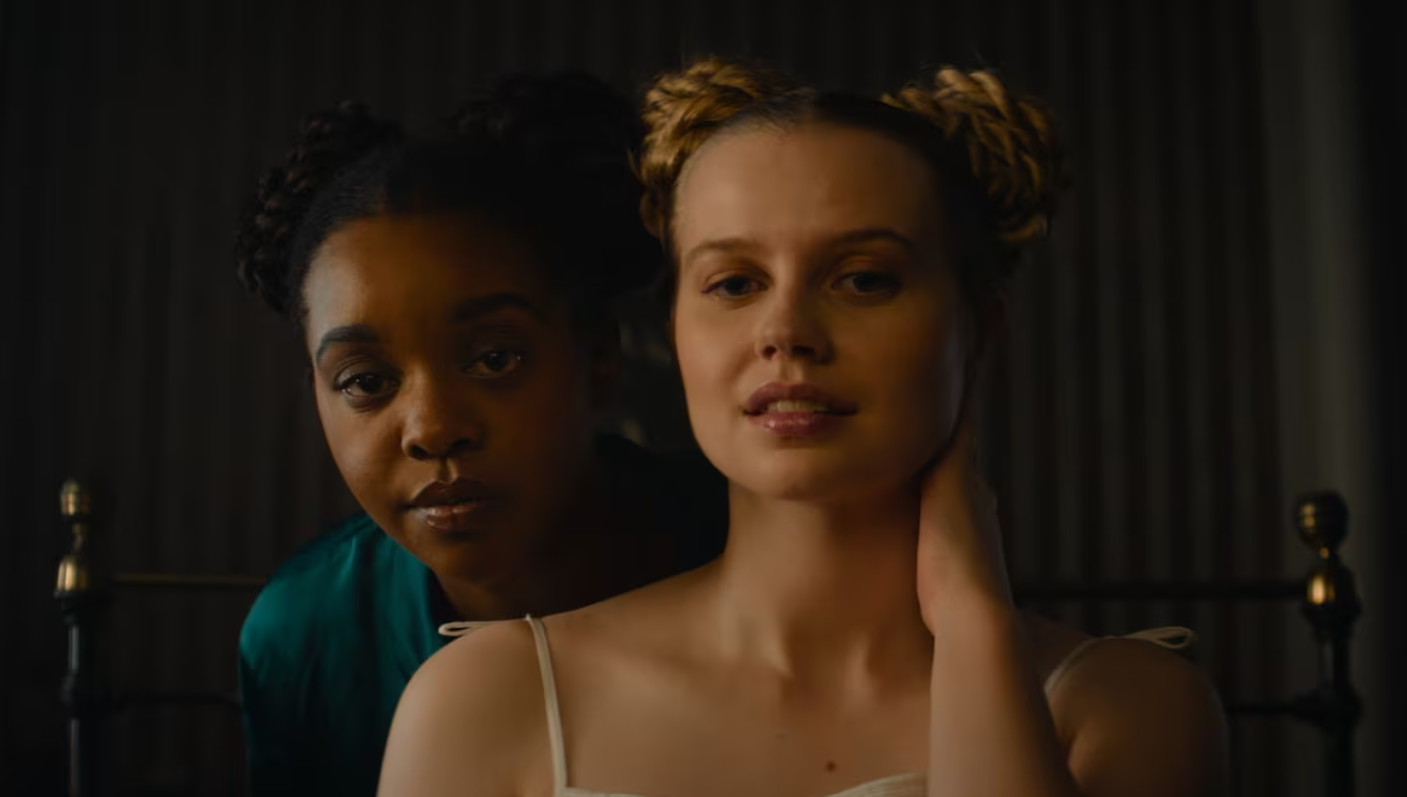
Over the years, Virgo’s films and series have won numerous awards, including 12 Canadian Screen Awards for Brother and 11 for The Book of Negroes. Yet more than thirty years into his career, he continues to evolve and experiment. His latest film, Steal Away, is an Afrofuturist thriller that explores the complex racial and power dynamics between two young women. Co-written by Virgo and his creative and life partner Tamara Faith Berger, the film has a feminist bent.
“That’s in keeping with his ability to always be pushing the envelope,” says Bailey. “He’s ahead of the game all the time, ahead of what people are thinking about and putting on the screen.”
For Bailey, Virgo’s name belongs in the same pantheon of great Canadian storytellers as Leonard Cohen, Margaret Atwood and Lawrence Hill.
“He tells stories that are uniquely Canadian in a uniquely Clement Virgo way,” she says. “He’s not afraid of busting it open, and that lack of fear is something that young Canadian filmmakers can look to as a North star.”
A scene that mattered: Steal Away, 2025
In Steal Away, Fanny (Angourie Rice) is a sheltered teenager from a wealthy family and Cécile (Mallori Johnson) is a refugee seeking asylum who comes to live at Fanny’s house.
Early on, there is a scene where Fanny takes the stage to sing Edith Piaf’s “Non, je ne regrette rien” at a party while Cécile watches her from the crowd.
“Everyone is around them, but the connection between the two characters is so pregnant that it feels like those deep exhales when you’re reading a piece of poetry and one line just stops you in your tracks,” Bailey says.
This is signature Virgo, she adds. “There’s a lot of that in his filmmaking, where he just allows the viewer to breathe into the moment.”